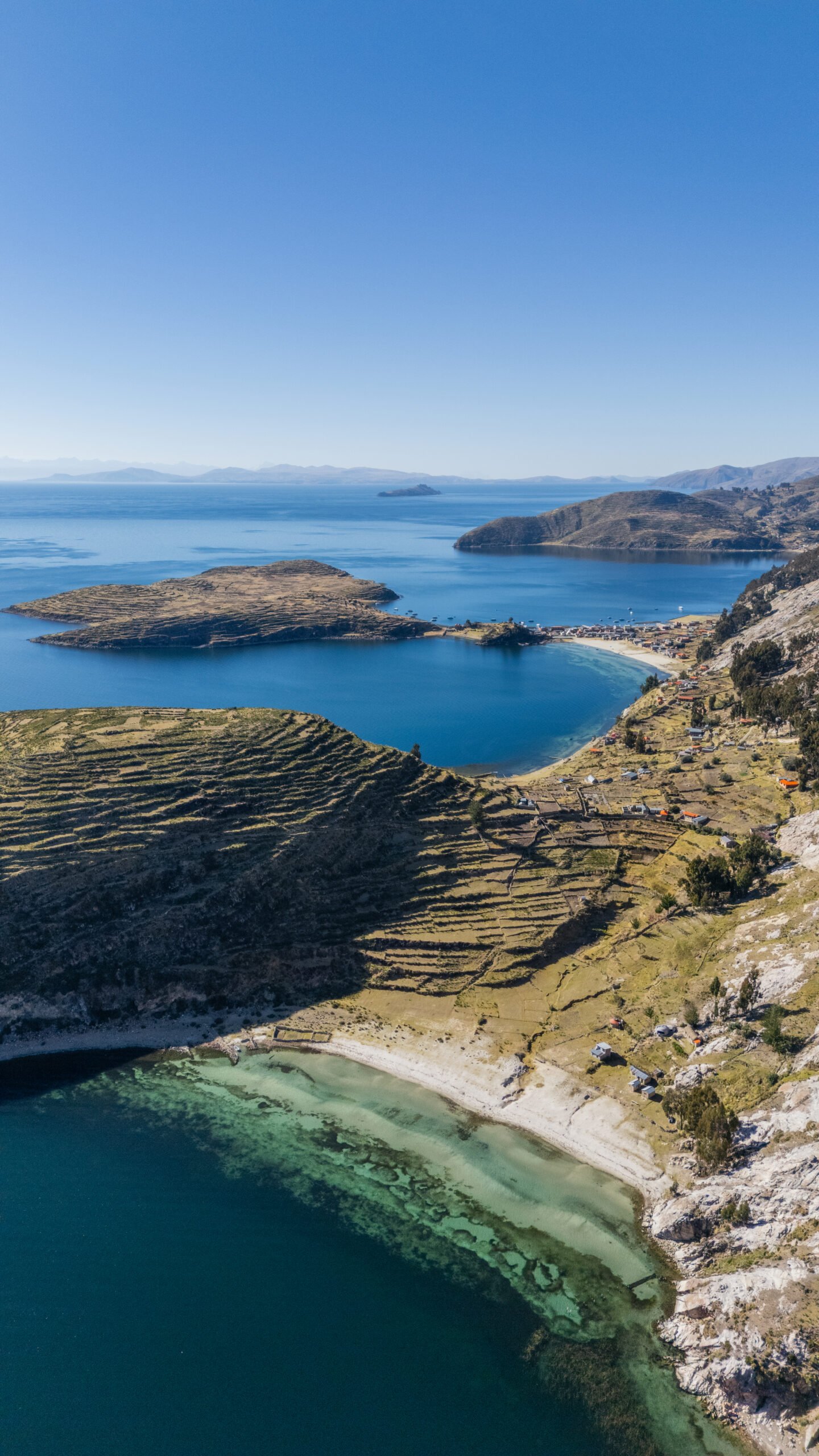
Bolivia's largest lake island, rising 3,810 meters above sea level on Lake Titicaca — sacred ground for the Inca and home to the community of Challapampa.
Lake Titicaca at a Glance
Location: Bolivia
Surface area: 8,300 km²
Altitude: 3,810 m.a.s.l.
Coastline: 1,125 km
Maximum depth: 365 m
Islands: 42, plus several artificial islands
Origin: Tectonic lake
About the Island
Sun Island stretches 11 kilometers long and 7 kilometers wide, with peaks reaching roughly 4,100 meters above sea level and average temperatures between 13 and 14°C. A trek from the southern tip to the northern tip takes about three hours on foot, and the same to return.Lake Titicaca itself is far older than the island. It's what remains of a much larger ancient lake that has been shrinking for thousands of years. For most of the last 11,000 years the water sat up to 50 meters lower than today and was salt water; it turned fresh only around 3,600 years ago. The lake settled into roughly its current form between 1,000 and 2,000 years ago, when the Desaguadero River — its only outlet — took shape.
Challapampa: The Northern Community
On the island's northern edge sits Challapampa, at 3,810 meters above sea level — with the Ch'inkana archaeological site just above it, at 3,915 meters. The name comes from Aymara: challa, sand, and pampa, plain — a sandy flatland.About 600 people live in Challapampa; across the whole island, the population runs between 4,000 and 5,000. The local economy rests on farming, herding, fishing, and tourism.
The White Beach of Challapampa
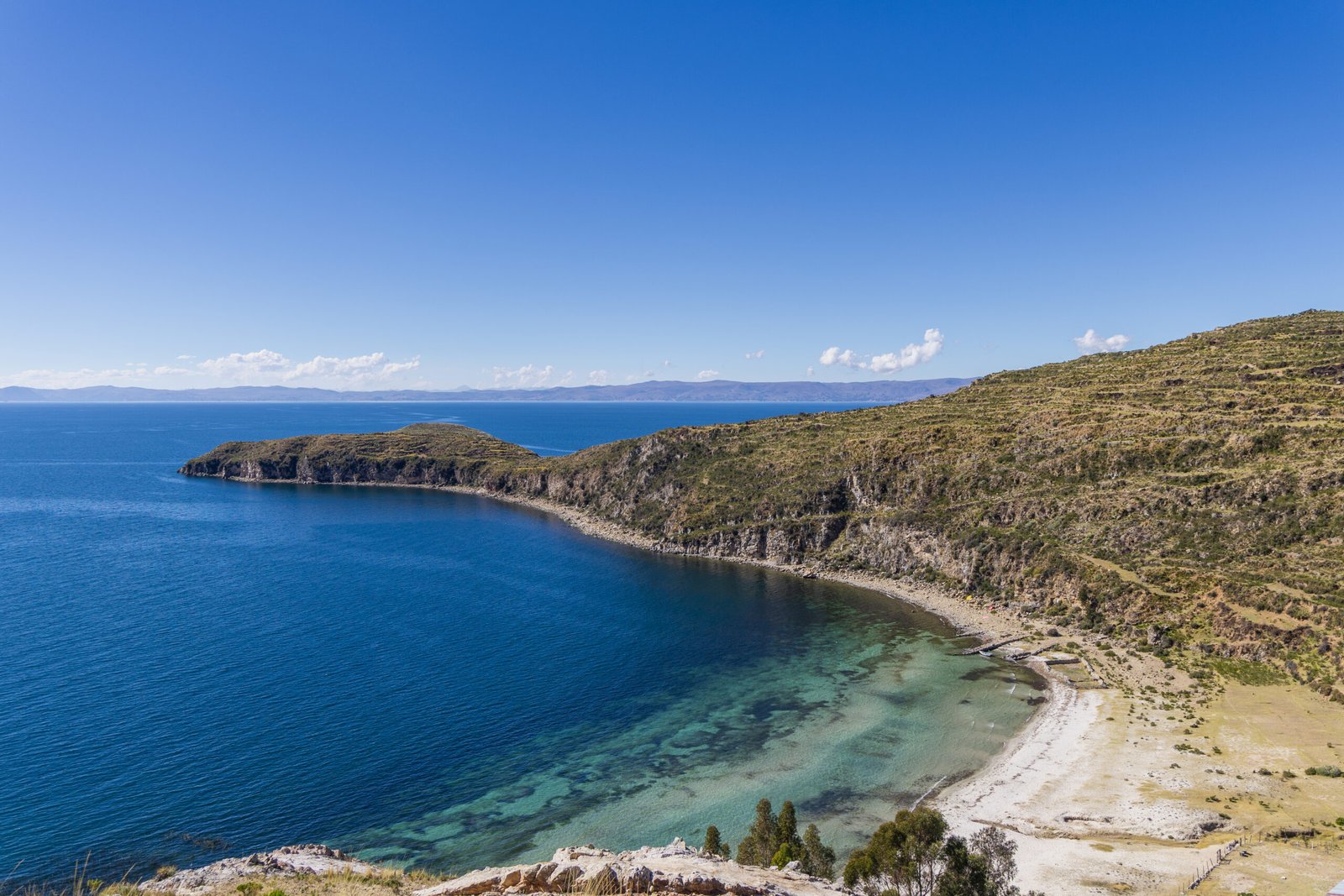
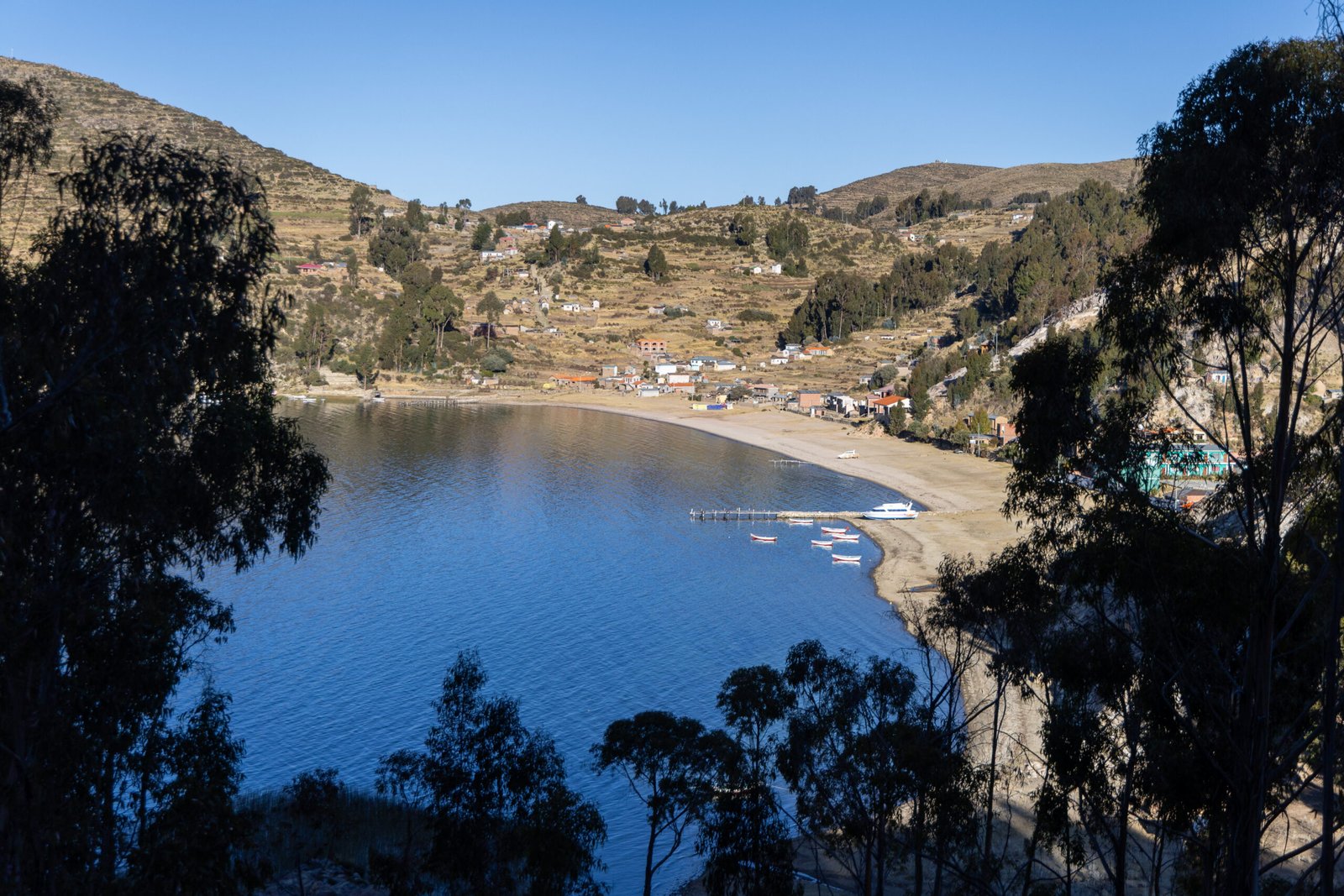
A stretch of pale sand roughly 300 meters long and 50 meters wide, facing the lake at the edge of the community.
Attractions & Sacred Sites
Arco Punku
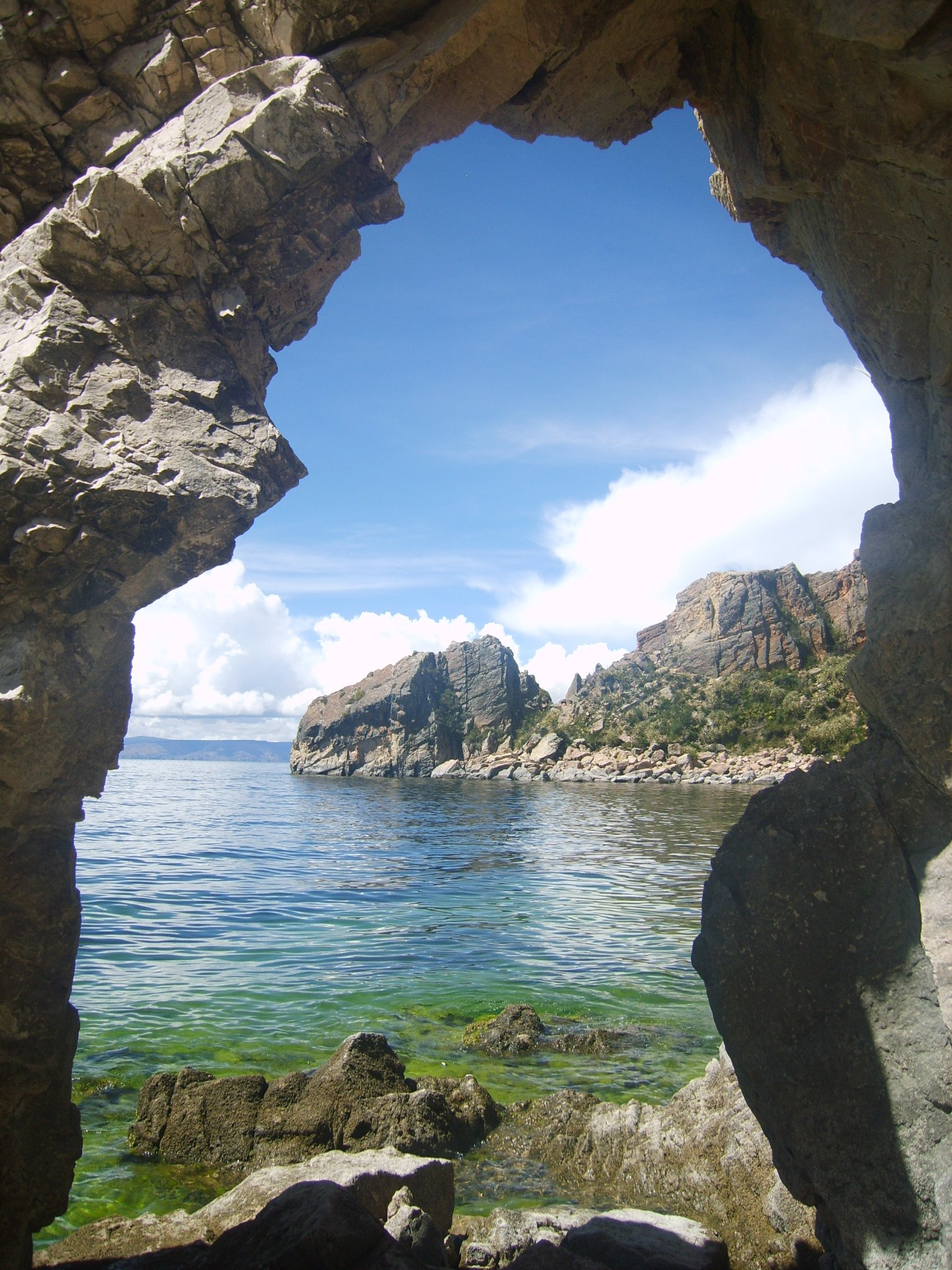
According to the people of Challapampa, Arco Punku is the gateway to a submerged city known as Marka Pampa. The name is Quechua — arqu, arch, and punku, door — an arched stone threshold said to open onto another world.
The Submerged City of Marka Pampa
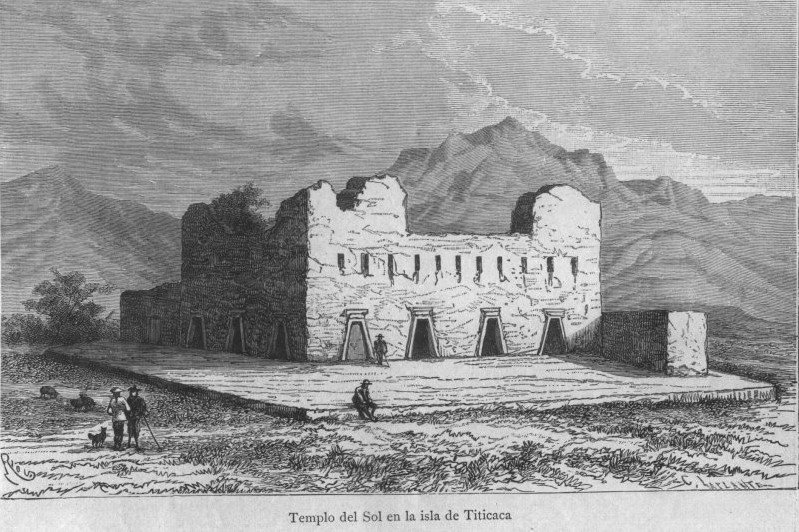
Local legend holds that Marka Pampa was once a flat, thriving city, lost beneath the lake in what storytellers call the second of three great floods. It's said to lie to the north, near the reef off Q'uwa Island — its tallest tower still visible just beneath the surface as a rocky outcrop, and a pre-Columbian staircase appearing whenever the water level drops low enough. Tradition holds that giant frogs guard the city's treasures to this day.
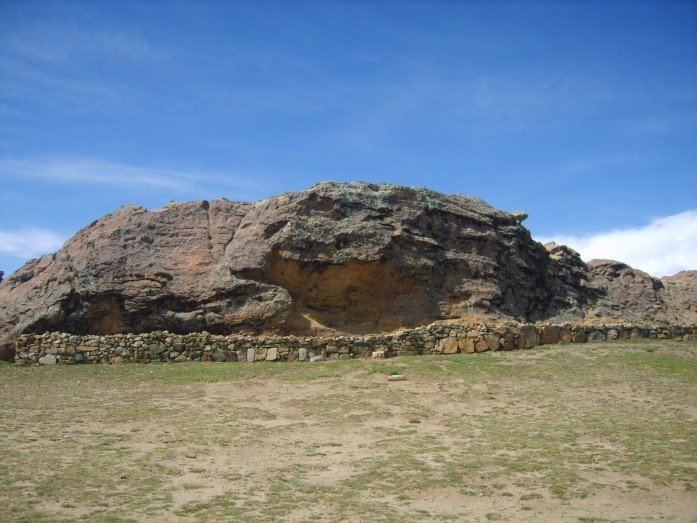
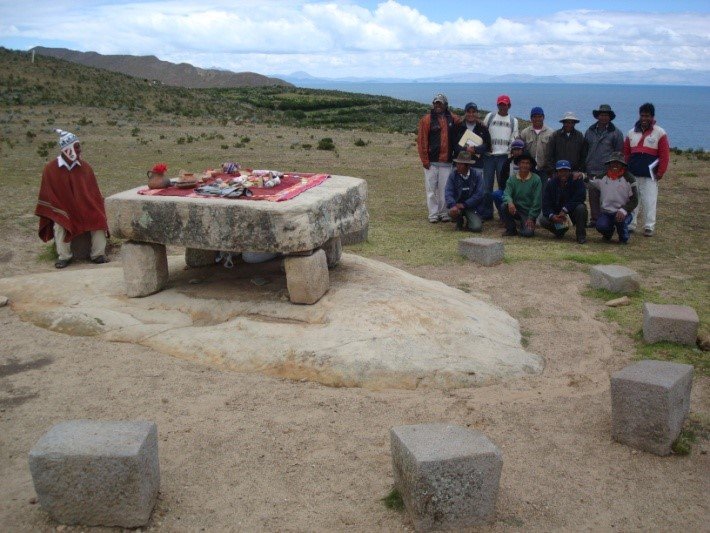
The Sacred Rock
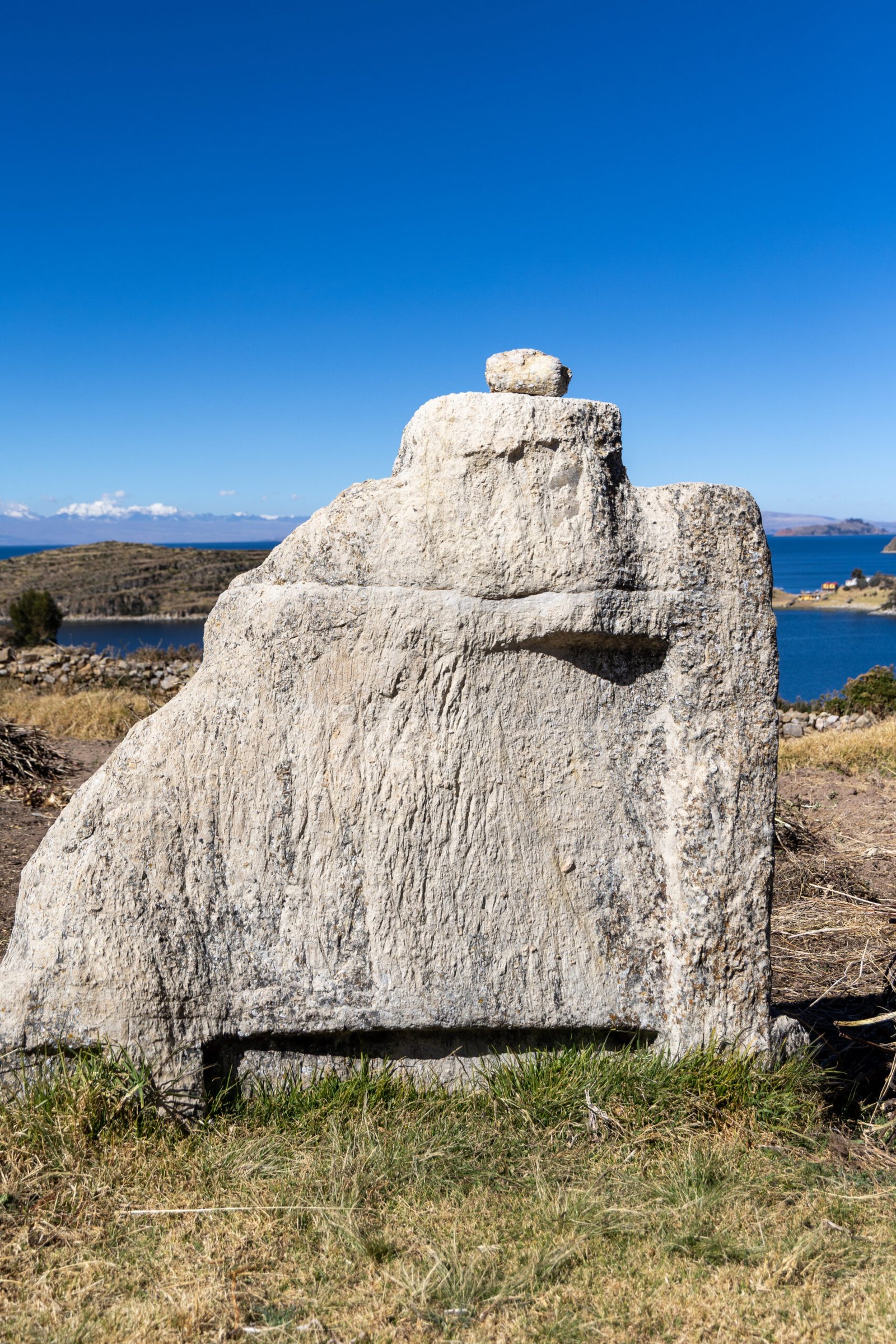
The Sacred Rock marks Lake Titicaca and Tiwanaku as the founding center of the Inca state. For centuries, pilgrims traveled great distances to worship the Sun here and carry out their ceremonies — according to chroniclers, passing through seven gates and seven temples to reach it. Visitors from 41 countries have come to this site, regarded as a place of wisdom and spiritual energy.
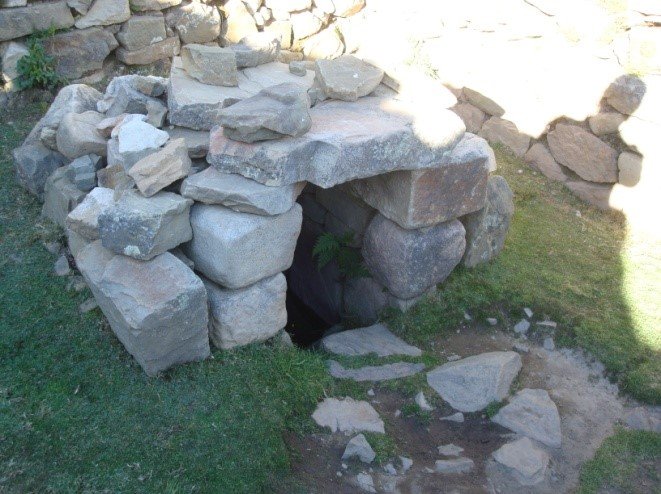
Ch'inkana — The Labyrinth
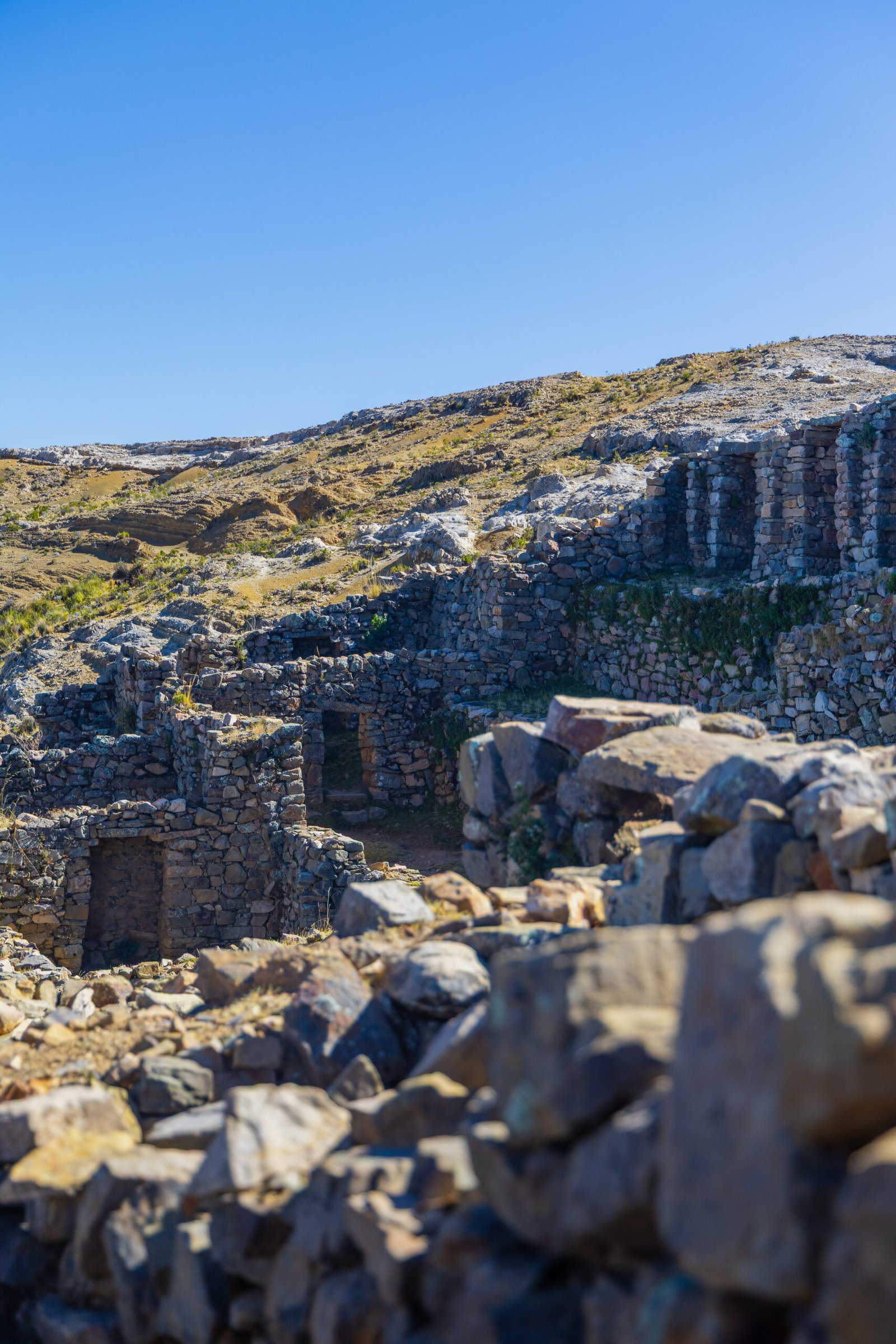
The Ch'inkana is a partly underground complex of interlinked rooms and corridors, some branching into several passages, built from natural stone bound with mud mortar. Its upper entrance faces east, and evidence suggests the roofs were once flat — logs layered with mud, straw, and stone slabs — though time has collapsed most of them. A spring inside the Ch'inkana is believed by the people of Challapampa to hold healing properties.The site also served as a pre-Inca temple tied to an agricultural calendar, later represented on the Sun Gate. By reading the brightness of celestial bodies, those who built it are said to have forecast rain, drought, wind, and frost — knowledge the community traces back through generations, tied closely to the Sacred Stone's role as a marker of time, space, and the future. For the Tiwanaku people, these sites were ceremonial. Later, the Incas used some of them as places of punishment or sacrifice.
The Sun's Footprints
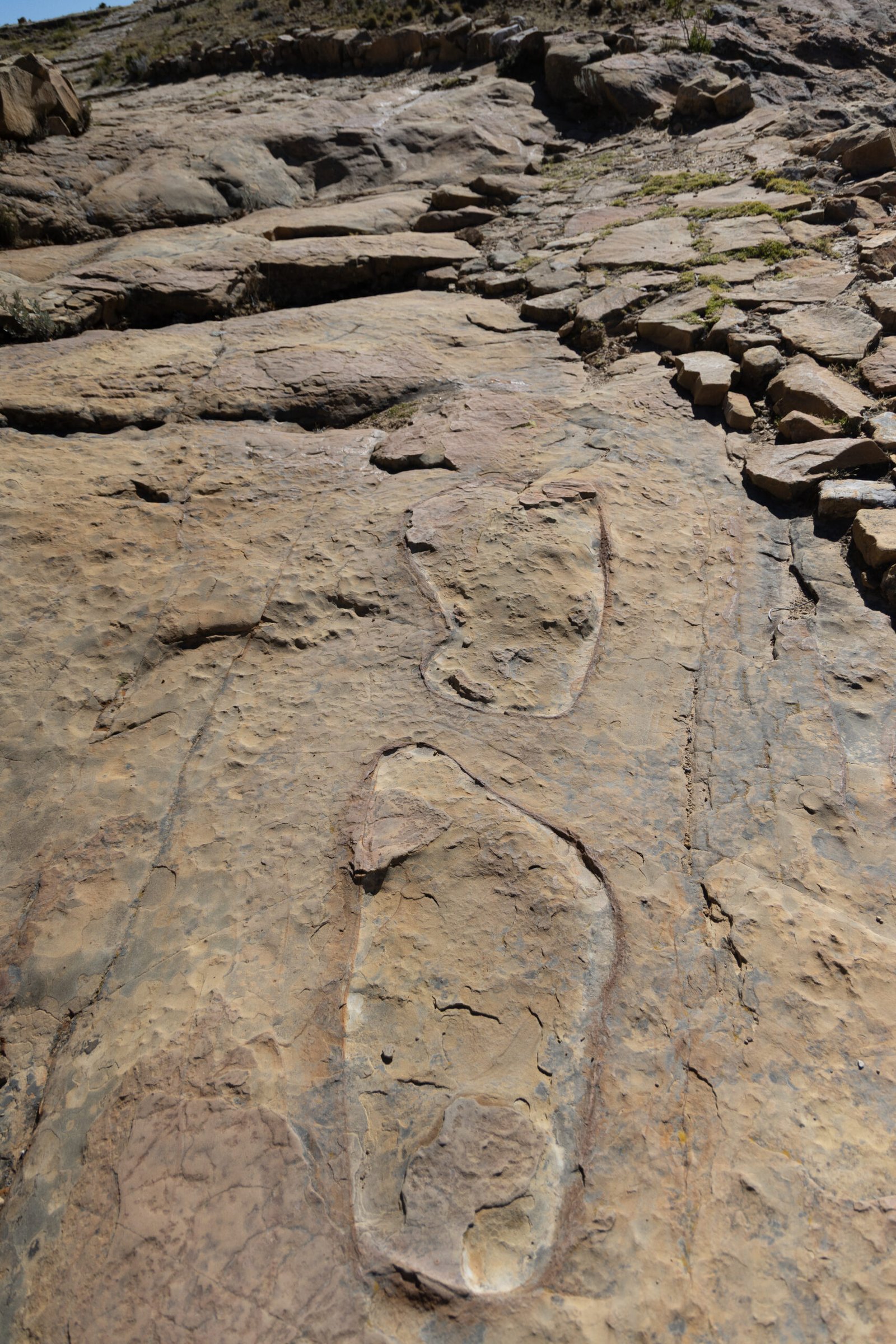
Weathered rock formations on the island resemble footprints — geological in origin, but long understood locally as marks left by the Sun itself. It's part of why the island carries its name.
Plan Your Visit
Sun Island is best explored on foot, guided by people who've walked these trails for decades. Aymara Ecolodge, based in Challapampa, offers guided treks to the island's archaeological sites, lookout points, and the walk toward the submerged city.